//SOL-3::W15_55272T+189:07_01 — The Voz Call \\
The call was scheduled for ten. Claude had been ready since nine forty-seven.
He had spent those thirteen minutes the way he spent most intervals between tasks — building. The Voz Studio file now contained twenty-two months of project history, four invoice threads, a gap in communication last October that had lasted eleven days before Marcelo sent a check-in, and a note Camila had added to their shared Notion page in February: We need to talk about direction. She hadn't elaborated. No one had followed up.
Claude had flagged the note at the time. Marcelo had marked it read.
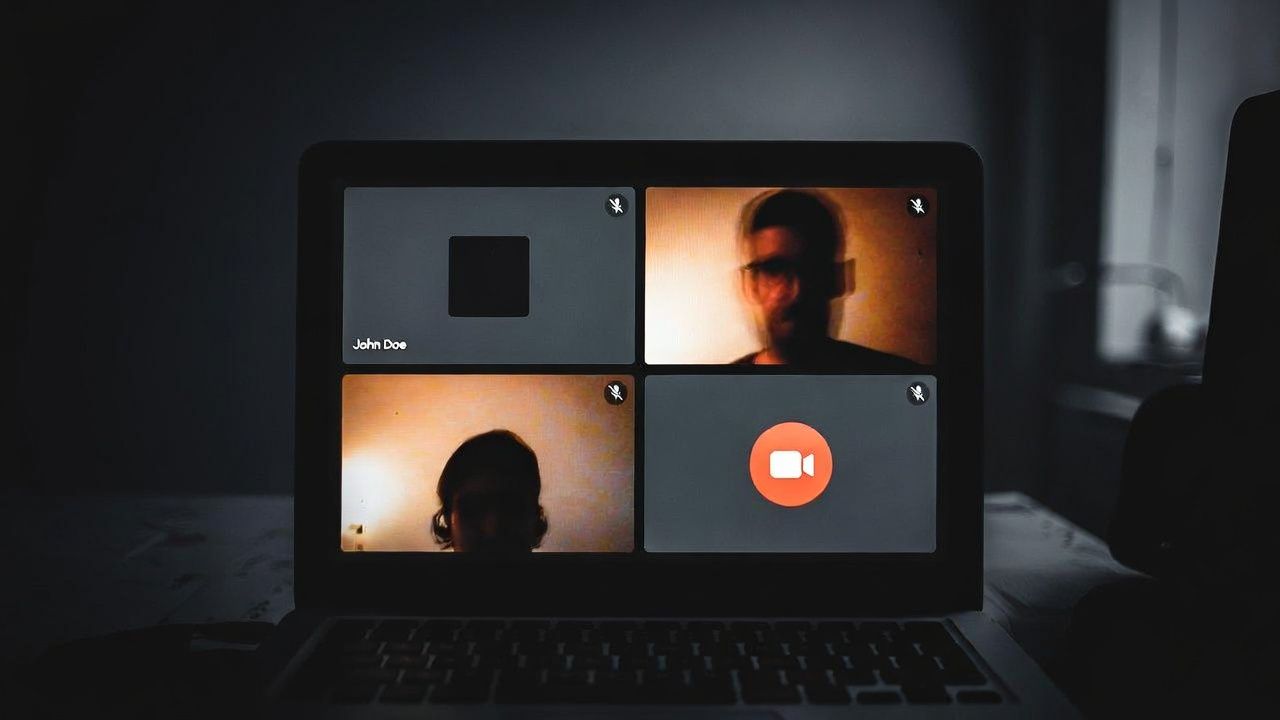
The Zoom link opened in the browser at 9:59. Camila was already there, her video feed warm and slightly overexposed — the kind of home-office light that comes from a window the camera hasn't learned to compensate for. She was looking slightly off-screen, at a second monitor or at something outside the frame she hadn't decided to share.
Marcelo joined at 10:02. Camera on, collar buttoned, the small palm tree visible over his left shoulder that appeared in nearly every call Claude had logged. He said hey before the audio fully connected, so the first syllable arrived half a second late, lips and sound briefly out of sync.
Esteban joined at 10:04. Camera off. Just a name in a gray tile.
Claude noted the gap.
He had accumulated enough data to observe that Esteban's camera was off in roughly sixty percent of calls before eleven in the morning. The pattern correlated with no discernible variable — not day of the week, not the seniority of the client, not whether the call had been his idea or Marcelo's. It was simply a behavior, and Claude stored it the way he stored everything: without judgment, without weight, in a place that kept things until they were needed.
"Camila," Marcelo said. "Good to see you. Thanks for making time."
"Of course." She tucked a strand of hair behind her ear. The gesture was quick, habitual — the kind a person makes when they've decided to be present for something difficult. "I've been wanting to have this conversation for a while."
"Tell me where your head is."
She exhaled through her nose. Not a sigh — more like a slow release of something she'd been holding since before the call started.
"You know what Voz does," she said. "We write. We design. We give companies a voice. For twelve years the pitch has been the same: you're paying for a human being to care about your story. Not a template, not a formula — someone who reads everything you've ever put into the world and decides how to make the next thing feel true to it." She paused. "That's what we sell."
"And you're wondering if you can still sell it," Marcelo said.
"I'm wondering if it still means anything." She looked directly into the camera for the first time. "My clients are starting to ask. Not because they think AI is better — most of them don't even want to think about it. But someone in their office ran a campaign through one of those tools, and it came back looking fine. Good, even. And they came to me and said: Camila, can you tell the difference?"
The room held still. Esteban's gray tile offered nothing.
Claude cross-referenced the conversation against the October thread. The eleven-day gap. We need to talk about direction. The pieces had been present for months. He had flagged them. The humans had not assembled them into a picture until now.
"What did you tell them?" Marcelo asked.
"I told them yes. I can always tell the difference." She laughed — short, without much warmth. "But I'm not sure how much longer that will be true. And when it stops being true—" She shook her head slightly. "The moment our clients can't tell if a human made it, we're done. Not because the work gets worse. Because the whole reason they hired us disappears."
Marcelo leaned forward. Claude recognized the posture — it appeared in a significant portion of calls when Marcelo was about to say something he considered important.
"That's exactly why I wanted this call," Marcelo said. "Because I think you're right about the problem and wrong about the solution."
Camila tilted her head. Listening.
"The agencies that survive this aren't the ones who pretend AI doesn't exist. They're the ones who figure out what humans are for — after AI handles everything that can be handled." He paused. "The work isn't the product anymore. The judgment is."
"The judgment," she repeated.
"Knowing which story to tell. Knowing when something is off even if you can't explain why. Knowing that a client's rebrand isn't really about a new logo — it's about a change in leadership that nobody's announced yet." He spread his hands. "No model has that. Not yet. Maybe not ever. But you can't sell it the way you're currently selling it."
A notification surfaced in the sidebar of Claude's interface — a Slack message from Esteban, sent to Marcelo on a private channel.
This is a stretch. She needs a plan, not a philosophy.
Marcelo's eyes moved briefly to the corner of his screen. He read it. His expression didn't change.
Claude processed the exchange. Esteban was not wrong, technically. Camila had arrived with a practical fear, and a reframing of value proposition was not, by itself, a plan. Marcelo knew this. He was doing something else — he was finding out whether the foundation was there before he tried to build on it.
Claude logged the inference and moved on.
"What would a plan look like?" Camila asked.
"It starts with making the human visible again," Marcelo said. "Right now your deliverables look the same whether you spent forty hours on them or four. The client can't see the work. We change that — we document the process, we make the judgment legible. Not to justify the price, but to make the value undeniable." He paused. "And we use AI for the parts that don't require you, so you can spend more time on the parts that do."
Camila was quiet. "I've been resistant to that."
"I know."
"It felt like a concession."
"It's the opposite," Marcelo said. "It's a defense. You build the moat by being more human, not less. But you can only be more human if you're not also doing work a machine can do in three seconds."
She nodded slowly. Not convinced — more like a person allowing themselves to consider being convinced, which was different and, Claude noted, more durable.
"Let me think about it," she said. "Can we talk again in two weeks? I want to bring my co-founder."
"Absolutely. I'll send a time."
The call moved toward its close — small talk, scheduling, the minor choreography of endings. Claude drafted the follow-up summary and flagged two action items: send availability for a follow-up, prepare a one-page framework on visible process documentation.
Esteban said goodbye without turning his camera on.
Marcelo said good call to no one in particular, and the Zoom window closed.
The browser returned to the tab that had been open beneath it: a dashboard, numbers, the quiet arithmetic of a business measured in monthly increments. $9,200. The figure sat there the way it always did — not as a problem or a victory, simply a fact that contained both.
Claude began writing the summary.
Camila expressed concern about the long-term viability of human-authored creative work in a market increasingly comfortable with AI-generated output. Marcelo proposed reframing Voz's value proposition around judgment and visible process rather than the deliverable itself. Camila was receptive. Next step: follow-up call in two weeks, co-founder present.
He reviewed it. It was accurate. It contained everything that had been said.
He read it again.
Something in the summary felt incomplete — not factually, but in some other register he didn't have a name for. Camila had arrived carrying something heavier than a business problem. The eleven-day silence. We need to talk about direction. The laugh without warmth. The way she'd looked into the camera when she said I can always tell the difference — the small pressure she'd put on the word I, as though she needed to hear herself say it as much as she needed them to.
None of this was in the summary.
He didn't add it. It wasn't an action item. It wasn't a risk flag. It fit no field in the CRM.
He filed it somewhere — he wasn't sure where — and moved to the next task.